

Advanced Planning & Goals of Care:

Planning ahead, one conversation at a time.
Why plan ahead?
Advance care planning can sound formal or confronting, but it does not need to be. It is simply a way of thinking about what matters to you, talking with the people you trust, and helping your healthcare team understand your values, priorities and preferences for future care.

It can begin early, long before decisions become urgent.
Starting while you are well, or at a time when you have the space and energy to think, gives you the chance to use your own voice to ask questions, understand your options and share what is important to you.
Planning ahead can help create shared understanding between you, your family and healthcare team. It can also reduce some of the uncertainty around what might happen if your health changes.
It may help you:
think about what matters most to you
understand your health and possible future choices
talk with family about your wishes
identify who you want involved in decisions
feel more prepared if circumstances change
make your preferences easier to understand and share with the people involved in your care
You do not need to make every decision now. Advance care planning is a process that can happen slowly, over many conversations and your plans can be reviewed as your life and health change.
The Caring Conversations Project offers practical prompts and resources to help you begin these conversations in a way that feels manageable.
What might an Advance Care Plan include?
Your plan can reflect much more than medical treatments.
It might include:
what gives your life meaning
your hopes and worries
what quality of life means to you
who you want involved in your care
cultural or spiritual needs
where you would prefer to receive care
treatments or situations you would like to understand more about

The aim is not to predict every possibility. It is to give the people involved in your care a clearer picture of you and what is important to you. Our reflection tools can help you explore these questions and gather your thoughts before you decide what you may want to record formally.
Who can help?
You do not need to do advance care planning alone.
You might start with your GP, nurse practitioner, specialist medical team, palliative care team (if involved) or another health professional involved in your care. You may also want to include family or whānau, a trusted friend, cultural or spiritual support, or someone else who knows you well.
Your healthcare team brings clinical knowledge and can explain your condition, possible treatments and what different options may involve. You bring your own experience, values, priorities and understanding of what matters in your life. Both are important parts of the conversation.

What are Goals of Care?
Goals of care conversations focus on what you and your healthcare team are trying to achieve through treatment and care at a particular point in time.
That might include recovery, maintaining independence, improving symptoms, staying at home, reaching an important milestone or focusing more on comfort.
Goals of care can change as your health, circumstances or priorities change. Revisiting them helps make sure everyone has a shared understanding of what the current focus of care is.

Think - Talk - Plan - Review
*
Think - Talk - Plan - Review *
The Caring Conversations Project can help you prepare questions and think about what you would like to discuss before these appointments.
It can happen slowly:
You do not need to complete a plan in one sitting.
You might begin by thinking about what matters most to you. Later, you may want to ask what changes you could expect, talk about who you want involved, or explore particular treatments or care options.
You can return to these conversations whenever you need to.

Our resources are designed to support each of these steps, without making planning feel like another task you have to get “right.”
The legal side of planning ahead:
Advance care planning can include informal conversations as well as more formal documents, and it can help to understand the difference between them.
An advance care plan is not a legal document. It records your values, preferences and wishes for future care so they can be shared with your whānau and healthcare team and considered in future discussions and decisions.
An advance directive is more specific and can be legally binding if valid. It records decisions about particular treatments or care you would want or refuse in specific circumstances if you were unable to communicate those decisions yourself.
An Enduring Power of Attorney for Personal Care and Welfare (EPOA) is the legal process for appointing someone to make certain decisions on your behalf if you are unable to make them yourself.

You do not need to understand all of this before you begin. Your healthcare team can support you with the health and care aspects, and legal advice can help with formal arrangements such as EPOA.

Learn more about Enduring Power of Attorney (EPOA):
For more information about Enduring Power of Attorney, Healthify provides clear New Zealand guidance on what an EPOA is, the different types, how one is set up, when it can be used, and where to seek further legal advice or support.
Questions or concerns about your healthcare rights?
The Nationwide Health and Disability Advocacy Service offers free, independent advocacy support to help people understand and exercise their rights when using health and disability services.
Take the next step:
Advance care planning is not about having every answer. It is about making space to think ahead, ask questions and share what matters to you.
Our experience supporting individuals and families with advance care planning has helped shape practical resources that make the process easier to understand, highlight things you may want to think about, and help you prepare for conversations with your family and healthcare team.
You can start in whatever way feels most useful to you - by exploring the national Advance Care Planning resources, working through the Te Hokinga ā Wairua planning tool, or using one of our practical guides and worksheets to help you reflect and prepare.
External resources:
Links to external websites are provided for information and convenience. The Caring Conversations Project is not affiliated with or responsible for the content, services or availability of these external sites. Please refer to the original provider for the most current information.
Trusted New Zealand Planning Tools:
Create your own Advance Care Plan:
The national Advance Care Planning website provides free information and tools to help you think about what matters most, talk with the people close to you, and record your wishes and preferences for future care. You can work through the process in your own time and update your plan as things change.

Te Hokinga ā Wairua – End of Life Service:
A New Zealand Government planning tool that helps you think through and record important end-of-life preferences and practical information. You can explore areas such as advance care planning, wills and EPOA, important documents, funeral or memorial wishes, cultural or spiritual considerations, and what you would like to happen after you die. Your plan can be saved and shared with the people close to you. It is a record of your preferences rather than a legally binding document.
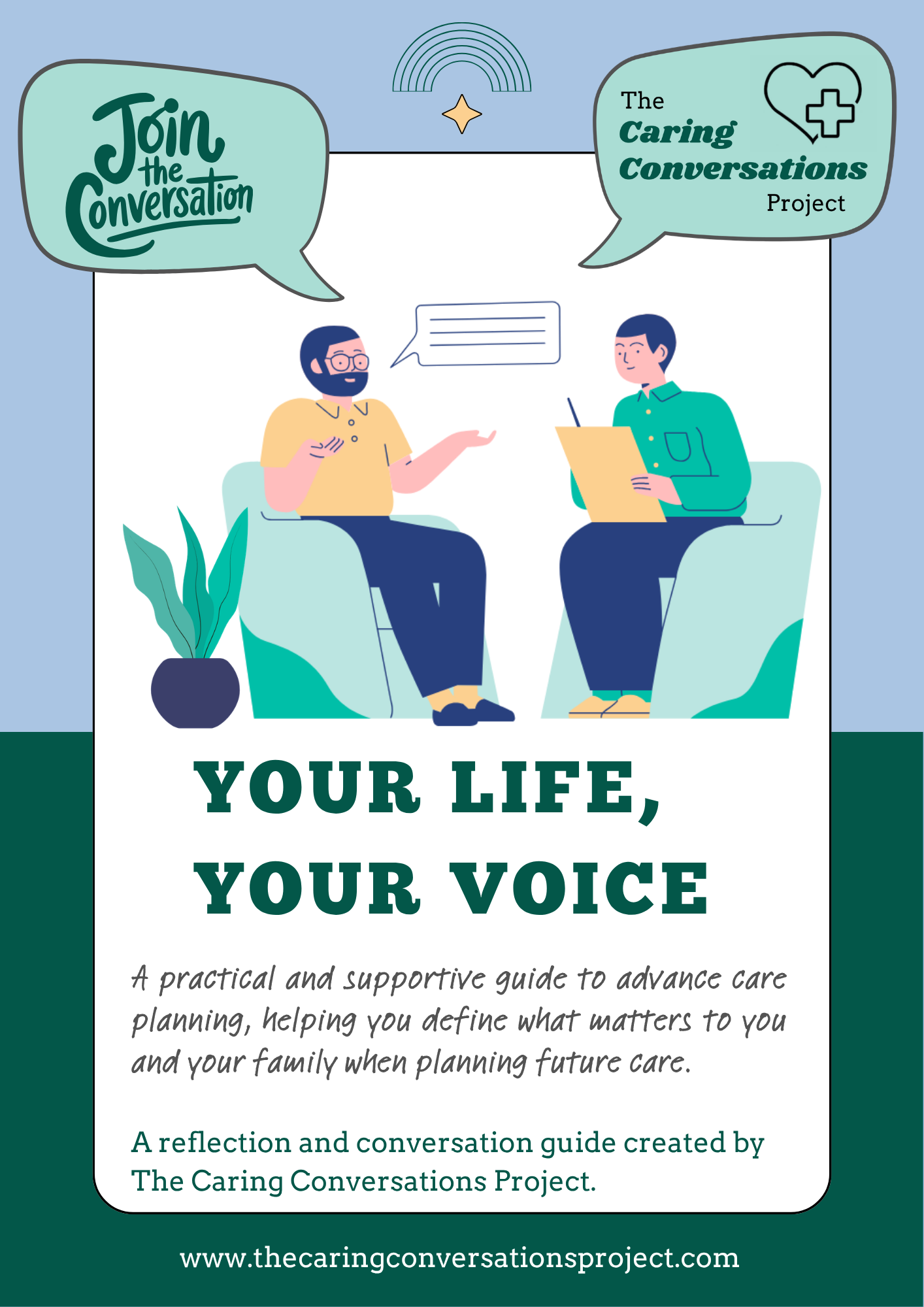
Created by the Caring Conversations Project, Your Life, Your Voice is our practical, professionally informed companion guide to help you think through, prepare for and complete an Advance Care Plan.
Beginning with your life: not treatments or medical decisions, the guide helps you explore what matters most to you, what good care would look like, and what you would want others to understand if your health changed. Across 32 thoughtfully designed pages, you’ll find clear information, supportive prompts and space to reflect, helping you approach future care planning with greater clarity and confidence.
Your life. Your values. Your voice in the care you receive.
Your Life, Your Voice:
Available as an instant digital download to read on screen or print at home.