


Understanding Palliative Care:

What it is, when it may be helpful, and how to support patients and families.
More than end-of-life care:
For health and care professionals, increasing understanding of palliative care is an important part of reducing the fear and stigma that can surround it. How palliative care is described, introduced and discussed can strongly influence how people respond to it and whether they feel able to access support early.
By recognising palliative care as part of good, holistic care rather than something reserved for the very end of life, professionals can help ensure people are offered the full range of support available to them.
This means looking beyond diagnosis and treatment alone, and considering comfort, function, wellbeing, family needs, future planning, communication and what matters most to the person.

Palliative care is often associated with the final stages of life, but it can be introduced much earlier and alongside disease-directed treatment.
Its role is broader than end-of-life care. Palliative care can support symptom management, quality of life, decision-making, communication, emotional and practical needs, and the wider wellbeing of individuals and families living with serious illness.
It may include support with:
managing pain, symptoms and treatment-related concerns
helping people understand their illness, treatment options and what may lie ahead
exploring goals, values, priorities and what matters most
planning ahead for future care and possible changes
supporting families, carers and children
attending to emotional, social, cultural and spiritual wellbeing
navigating complex health and care systems
supporting communication and shared decision-making across teams
Better understanding can lead to earlier conversations, more appropriate referrals and more complete wraparound care for individuals and families. It creates space for honest conversations, thoughtful planning, comfort and connection, while keeping the person - not just the illness - at the centre of care.
How you talk about palliative care matters:

The way palliative care is introduced can shape how people understand it.
If it is only mentioned when someone is very unwell or described in a way that sounds like treatment is stopping, it can reinforce fear and misunderstanding.
Clear, thoughtful language can help people see palliative care as an added layer of support: focused on comfort, quality of life, communication, planning and what matters most.
Challenging common myths is an important part of making that support easier to understand and access.
Mythbusting:
“Talking about palliative care will take away hope”
These conversations do not have to remove hope. They can help people understand what is happening, prepare for possible changes and identify what matters most to them, while still holding hope for the things that remain important.

“Palliative care is only for the last days of life”
Not necessarily. Palliative care can be introduced much earlier in the course of illness and may be helpful for months or even years, depending on a person’s needs.
“It means there is nothing more that can be done”
There is often a great deal that can still be done. Palliative care broadens the focus of care to include symptom management, quality of life, communication, decision-making and what matters most to the person and their family.
“It means stopping treatment”
This is an important misconception to address clearly. Palliative care does not automatically mean stopping treatment. Disease-directed therapies may continue alongside palliative care, together with supportive and comfort-focused care aimed at managing symptoms, improving quality of life and helping someone live as well as possible.
“A referral to palliative care means the person is actively dying”
Not necessarily. Referral can happen much earlier, particularly when there are complex symptoms, difficult decisions, changing goals of care or a need for additional support for the person and their family.

“Palliative care is only the responsibility of specialist teams”
A palliative approach can be provided by the person’s usual healthcare team, with specialist palliative care involved when needs are more complex or additional expertise is required.
“Palliative care is only about pain relief”
Pain and symptom management are important, but the scope is much broader. Palliative care also considers emotional, practical, social, cultural and spiritual needs, alongside communication, planning and support for family.
“Palliative care only happens in hospice”
Palliative care can be provided in many settings, including at home, in hospital, in aged residential care and in the community. Hospice and specialist palliative care services are part of this wider approach, rather than the only place palliative care happens.
Support,
Choice,
Connection
& Planning
*
Support, Choice, Connection & Planning *
Palliative support: where to start?

You do not need to wait for a specialist palliative care referral to begin providing palliative support.
Many aspects of a palliative approach - including symptom management, emotional support, planning ahead and conversations about what matters most - can begin within the person’s usual healthcare team, often from the time of a serious or complex diagnosis.
Starting these conversations early gives people and their families more time to understand their options, consider what matters to them and prepare for what may lie ahead, without feeling that every decision needs to be made at once.
Earlier palliative support can come from:
GPs and Nurse Practitioners: symptom management, medication review, advance care planning and coordination of care
Practice, District and Community Nurses: monitoring symptoms, providing practical support and helping coordinate care at home and in the community
Disease-specific teams such as oncology, respiratory, cardiac, renal or neurology: integrating symptom management, quality of life and future-care conversations alongside treatment
Paediatric teams: supporting children and young people with symptom management, care planning, communication and coordination, with specialist palliative care involvement when additional expertise is needed

Allied Health Professionals: including social workers, physiotherapists, occupational therapists, dietitians and psychologists, supporting function, wellbeing, adjustment, practical needs and quality of life
Māori and Community Health Providers: providing culturally responsive, practical and whānau-centred support, and helping connect people with services that fit their needs
Aged Residential Care Teams: providing ongoing comfort, symptom management and care planning, with specialist palliative care involvement when additional support or expertise is needed
Hospice Services: in some areas, offering advice, education, carer support, day programmes and other support alongside or before more intensive specialist palliative care input is required

In New Zealand, palliative care is often described as primary palliative care or specialist palliative care.
Primary palliative care is provided by the person’s usual healthcare team and can include symptom management, communication, care planning and support for their family.
Specialist palliative care is provided by dedicated palliative care teams when needs are more complex, such as difficult-to-manage symptoms, complex decision-making, or significant psychosocial, cultural or spiritual support needs.
Knowing what primary palliative support is available locally can make a real difference. Helping people and their families connect with support early can give them more choice, more time to plan, and a clearer sense of who is there to help.
Not sure how to start a conversation about palliative care?
Starting a conversation about palliative or hospice support can still feel difficult, particularly when someone is receiving active treatment or their future needs are uncertain. But waiting for a crisis can leave people, their families and teams with less time and fewer options.
Earlier conversations can support more proactive care by helping people understand what support is available, explore what matters most, prepare for possible changes and make decisions gradually over time.
They do not mean that every decision needs to be made now, or that the focus has shifted entirely to end-of-life care. They simply create more space for shared understanding, planning and choice.

The Caring Conversations Project offers practical resources that build on the knowledge and skills health professionals already have, with prompts, tools and ideas to support meaningful conversations about care, uncertainty, values and future planning.
What support can hospice care provide?
Hospice services provide specialist palliative care for adults and children whose symptoms, decision-making or wider support needs require additional expertise.
Hospice care is not limited to symptom management or the final days of life. It takes a holistic approach, supporting the physical, emotional, social, cultural and spiritual needs of the person, while also providing support for their families and carers.

Depending on the local hospice and the person’s needs, support may include pain and symptom management, specialist nursing and medical care, emotional and cultural support, practical guidance, support for family and carers, spiritual care and bereavement support.
Care may be provided at home, in the community, in aged residential care, in hospital or within a hospice facility. Hospice is not simply a place someone goes to die - it is a specialist service that can support people and their families across different stages of serious illness.
Hospice services vary across New Zealand, but care is generally provided free of charge to people receiving hospice services.
Referral pathways differ between services. Referrals are commonly made by a GP or another member of the healthcare team and some hospices also accept self-referrals.

Hospice New Zealand provides information about hospice and specialist palliative care across Aotearoa, along with resources, education and professional development opportunities for people working in health and care.
Support and information:
Explore trusted information, practical guidance and services that can support carers and families.
External resources:
Links to external websites are provided for information and convenience. The Caring Conversations Project is not affiliated with or responsible for the content, services or availability of these external sites. Please refer to the original provider for the most current information.
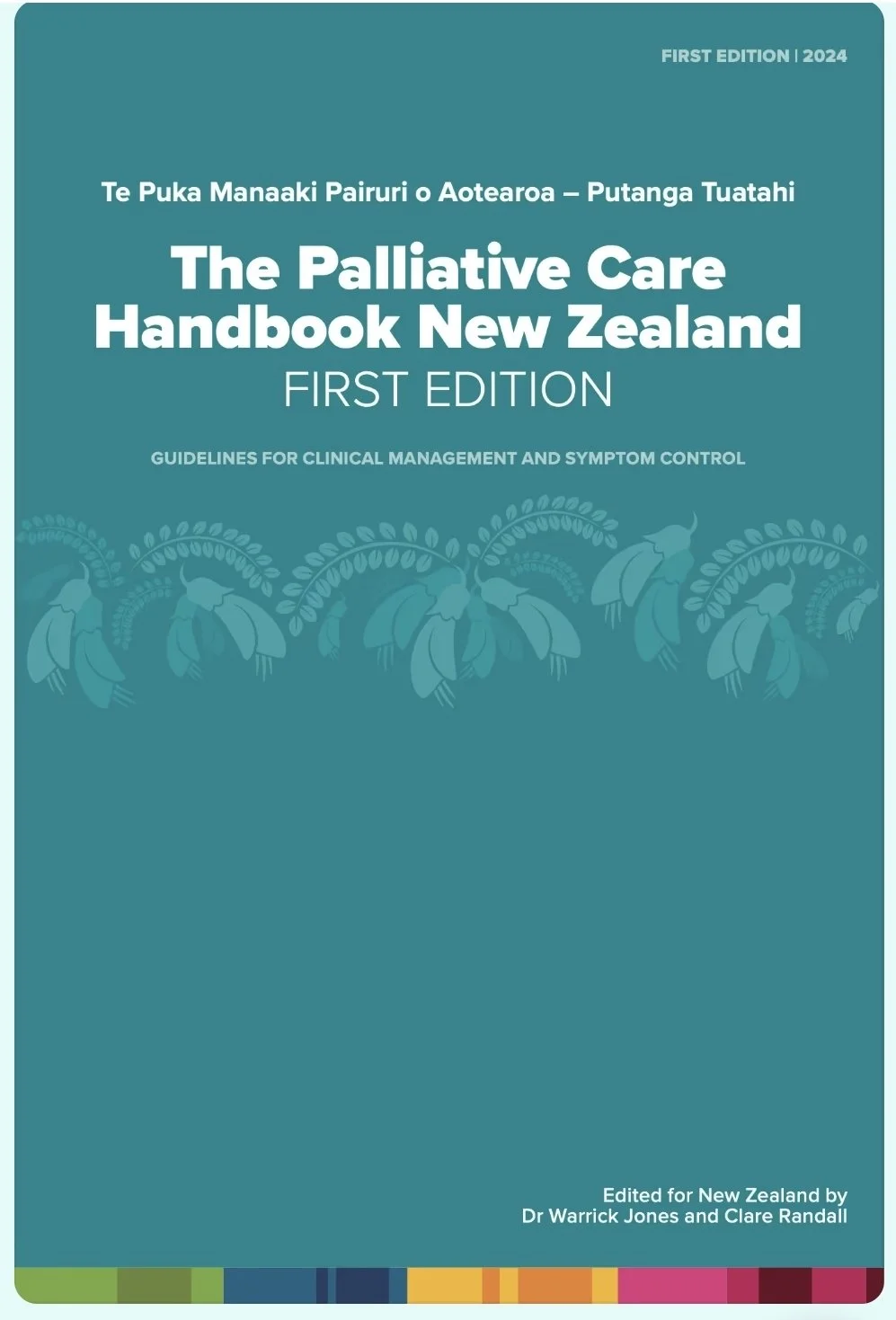
The Palliative Care Handbook – New Zealand Edition
A practical clinical resource for medical, nursing and allied health professionals providing palliative care across a range of settings. It includes guidance on symptom management, medicines, whole-person care and common clinical issues, with quick-search functionality for use in everyday practice. The digital handbook is available free to access online and can also be installed on a phone, tablet or desktop.

Health New Zealand | Te Whatu Ora – National Palliative Care Work Programme
An overview of current national work to strengthen palliative and end-of-life care across Aotearoa New Zealand. It includes information on models of care, national priorities, equity, service development and resources for the health sector.
Caring Conversations Project resources:
Coming soon: practical resources exploring caregiver wellbeing, recognising burnout, preparing for difficult conversations and navigating the emotional and practical impact of caring.
Join the mailing list for our quarterly newsletter or follow along on social media to hear about new resources, updates and useful information as they’re released.