

End of Life Care & Dying:

Practical guidance for recognising change, communicating clearly & supporting compassionate care at the end of life.
Recognising when someone may be approaching the end of life:
End-of-life care involves more than recognising that someone is dying. It is about responding to changing needs, reviewing what care is most appropriate, supporting the person and their family, and making sure communication remains clear, honest and compassionate.

Recognising that someone may be approaching the end of life is not always straightforward, particularly when deterioration is gradual or the illness trajectory is unpredictable.
Earlier recognition can create more time to review goals of care, anticipate symptoms, consider whether current treatments remain appropriate, involve the person and their family in planning, and coordinate the support that may be needed.
It can also help reduce crisis-driven decision-making by allowing conversations and planning to happen before changes become urgent.
As a person becomes more unwell, they and their family may need clear information about what is changing, what may happen next and what decisions may need to be considered.

These conversations may include:
changes in treatment goals
what interventions may or may not be helpful
preferred place of care
symptom management
what matters most to the person now
what the family can expect as the person becomes more unwell
Good communication does not mean having every answer. It means being honest about what is known, acknowledging uncertainty where it exists, checking understanding and creating space for questions.
Language matters:

The words used when someone is approaching the end of life can shape how people and families understand what is happening.
Phrases such as “there is nothing more we can do”or “treatment is stopping” can unintentionally sound like care is being withdrawn or that the person is being given up on.
A more helpful approach is to explain how the focus of care is changing, while making it clear that there is still a great deal that can be done to support comfort, dignity and quality of life.
For example:
instead of “There is nothing more we can do”
try “There may be less that treatment can do to change the illness, but there is still a lot we can do to support you and keep you comfortable.”
instead of “We are stopping treatment”
try “We are reviewing which treatments are still helping and focusing more on the care that will support comfort and what matters most now.”
instead of “There are no more options”
try “The options have changed, and it may be helpful to talk about what is most important to you now and how we can best support that.”

Clear, compassionate language can help preserve trust, reduce fear and make difficult conversations feel less abrupt.
Care in the last days of life:
When a person is thought to be in the last days of life, care should remain focused on comfort, dignity and what matters most to them.
This may include:
proactive symptom assessment and management
anticipatory prescribing
reviewing medicines, investigations and interventions
mouth, skin and personal care
conversations about food and fluids
supporting cultural, spiritual and individual preferences
considering the environment and preferred place of care
preparing family members for the physical changes they may notice

Helping families understand what is normal during the dying process can reduce uncertainty and help them feel more prepared.
Supporting families:
For many families, caring responsibilities also increase as someone becomes more unwell. This can place significant physical, emotional and practical pressure on family caregivers, and carer burnout may become a real risk if support is limited or needs escalate quickly.
Families may be managing exhaustion, uncertainty, anticipatory grief, changing roles and practical responsibilities while also trying to spend meaningful time with the person who is dying.
Professionals can support families by explaining what is happening, checking what they understand, preparing them for possible changes and making sure they know who to contact if they are worried.
Support should also consider the needs of children, caregivers and other people who are important to the person. This is an important part of holistic end-of-life care.
Explore our Carer Wellbeing & Support section for practical information on caregiver stress, burnout and accessing support.
After death & bereavement:
Care continues through the time of death and afterwards.
Respectful care after death, clear information about what happens next and culturally appropriate support can make a lasting difference to families. This may include practical guidance, bereavement support, opportunities to ask questions and referral to additional services where needed.
The wellbeing of health professionals is also important. Caring for people who are dying can carry emotional weight, particularly after complex or difficult deaths.

Our Wellbeing for Health Professionals section includes resources to support reflection, emotional wellbeing and the demands of this work.
Support and information:
Explore trusted information, practical guidance and services that can support carers and families.
External resources:
Links to external websites are provided for information and convenience. The Caring Conversations Project is not affiliated with or responsible for the content, services or availability of these external sites. Please refer to the original provider for the most current information.

Hospice New Zealand – Resources for Health Professionals
A collection of professional resources, education and clinical tools covering palliative and end-of-life care.
This includes Te Ara Whakapiri: New Zealand’s principles and guidance for caring for adults in their last days of life, as well as the Palliative Care Handbook and other learning opportunities.

bpacnz – Last Days of Life
A practical series for primary care and community clinicians, covering recognition of dying and management of common symptoms including pain, nausea and vomiting, delirium, breathlessness and respiratory secretions.
Caring Conversations Project resources:
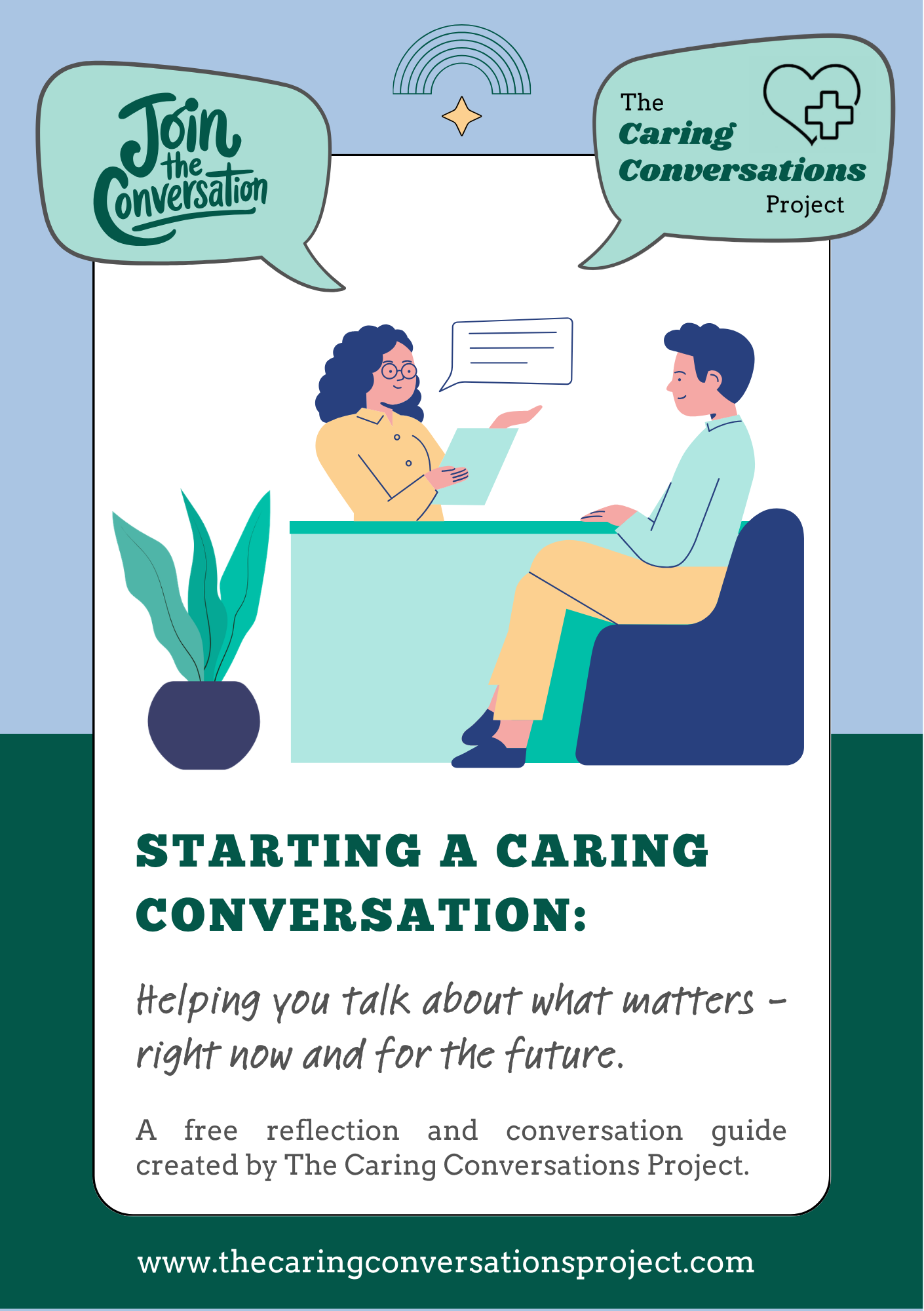
Available now: Starting a Difficult Conversation - a free practical resource for individuals and families preparing for sensitive conversations about care, wishes and what matters most.
Health professionals may also find it useful to share with people and families who need a little help getting started.
Coming soon: additional Caring Conversations Project resources focused specifically on end-of-life communication for health professionals, including language around changing goals of care, preparing families for what to expect, and supporting conversations as someone approaches the end of life.
Join the mailing list for our quarterly newsletter or follow along on social media to hear about new resources, updates and useful information as they’re released.