

End of Life Care - The Final Stage:
Understanding what to expect, what matters now, and how families can be supported through the final stage of life.
End of life care supports a person during the final stage of their life, when their health is declining and the focus of care is increasingly on comfort, dignity and what matters most to them.
For some people, this stage comes after months or years of conversations, planning and changing care needs. There may have been time to talk about what matters, make choices and prepare for what is ahead.
For others, there is no such gift of time.

Illness can change suddenly. A person may become too unwell to communicate, or families may find themselves facing decisions they never expected to make. Sometimes the person at the centre of the conversation is no longer able to tell us what they want.
If that is why you are here, you are still very much part of this conversation.
You may be reading on behalf of someone you love, trying to understand what is happening, what decisions need to be made and how you can support them through the final part of their life.
Where a person can still communicate, their wishes, values and priorities should continue to guide their care. If they cannot, the healthcare team will look to any known wishes, advance care planning or legal arrangements, alongside conversations with those who know them best.
Families can offer something deeply important: knowledge of the person behind the patient. You may know what brings them comfort, what they would find distressing, what has mattered throughout their life and what they may have said in everyday conversations long before anyone called it advance care planning.

End of life care may involve:
managing pain, breathlessness, nausea, agitation and other symptoms
reviewing medicines and treatments to make sure they are still helping
supporting eating and drinking as needs and abilities change
planning where care can be provided
helping families understand what changes to expect
emotional, cultural and spiritual support
making plans for comfort and care if the person becomes less responsive
supporting families and carers before and after the person dies
You do not need to know exactly what to do or say. Ask questions, tell the healthcare team what you know about the person you love, and ask them to explain anything that does not make sense.
Even when there is little time, there can still be meaningful conversations about comfort, dignity, connection and how someone is cared for in the time that remains.
What might change as someone approaches the end of life?
As someone becomes more unwell, their needs can change. Care may become more focused on comfort, symptom relief, dignity and what matters most to the person now.
Recognising when someone is approaching the end of life is not always straightforward. Sometimes changes happen gradually, and sometimes health can change quickly or unpredictably.

Having clear information about what is changing can help families understand what may happen next, prepare for decisions and know how best to support the person they care about.
Conversations with the healthcare team may include:
changes in the goals of care
which treatments are still likely to help
treatments or interventions that may no longer be helpful
where care can be provided
how symptoms such as pain, breathlessness or agitation will be managed
what matters most to the person now
what changes the family may notice as the person becomes more unwell
who to contact if there are concerns or sudden changes
Planning ahead where possible can reduce the pressure of having to make difficult decisions during a crisis. Even when time is limited, there may still be opportunities to talk about comfort, priorities and what the person would want their care to look like.
You do not need to understand everything at once. Good communication means the healthcare team explaining what they know, being honest about uncertainty, checking that things make sense and giving you space to ask questions.
It is always okay to ask: “What should we expect next?”, “What changes should we be looking out for?” or “What should we do if things change?”
Explore Caring Conversations Project resources designed to help you start conversations, consider what matters most and plan ahead with greater clarity and confidence.
Care in the last days of life:
Care may include:
managing pain, breathlessness, agitation, nausea or other symptoms
reviewing medicines and stopping those that are no longer helping
providing mouth care, skin care and personal care
supporting comfort when eating and drinking becomes more difficult
respecting cultural, spiritual and personal preferences
creating a calm and comfortable environment where possible
considering where the person would prefer to be cared for
helping family members understand the changes they may notice
making sure families know who to contact if they are worried or need support
When someone is thought to be in the last days of life, the focus of care is usually on comfort, dignity and what matters most to them.

You may notice that some parts of care begin to look different. Tests, monitoring or treatments that were previously important may no longer be helpful, while comfort and symptom relief become the priority.
This does not mean that care has stopped. Care continues, but its purpose changes to supporting comfort, dignity and quality of life in the time that remains.
Understanding what is normal during the dying process can reduce uncertainty and help families feel more prepared. The healthcare team should explain what is changing, what they are doing to keep the person comfortable, what you may notice and what to expect over the coming hours or days.

Supporting you and your family:
As someone becomes more unwell, caring responsibilities can increase quickly. Families may be managing exhaustion, uncertainty, anticipatory grief, changing roles and practical responsibilities while also trying to spend meaningful time with the person who is dying.
It is okay to need support too. Caring during the final days of someone’s life can be physically and emotionally demanding, and no family should be expected to manage everything alone.
Ask the healthcare team to:
explain what is happening and what changes you may notice
talk through anything you do not understand
show you what you can do to help keep the person comfortable
make sure you know who to contact if you are worried
help identify practical, emotional, cultural or spiritual support
consider the needs of children, caregivers and other people who are important to the person
Looking after family and caregivers is part of good end-of-life care too.
Explore our ‘Carer Wellbeing & Support’ section for practical information on caregiver stress, burnout and accessing support throughout the care journey.
After death & bereavement:

The time after someone dies can feel overwhelming, even when the death was expected.
Respectful care after death, clear information about what happens next and support that reflects your family’s cultural, spiritual and personal needs can make a lasting difference.
You may need help understanding practical next steps, what will happen to the person’s body, who needs to be contacted and what arrangements need to be made. The healthcare team, hospice, funeral director or other support services can help guide you through this.
Support may include:
clear information about what happens next
time and space with the person who has died, where possible
support for cultural, spiritual or family practices
practical guidance about funeral or other arrangements
opportunities to ask questions about what happened
bereavement and grief support
support for children and other family members
referral to additional services if more support is needed

Grief can look different for everyone, and there is no single way to respond after someone dies. Support may be needed immediately, or weeks or months later.
You do not have to navigate bereavement alone. Hospice, community organisations, healthcare teams and bereavement services can all provide information, support and somewhere to turn when you need it.
Support and information:
Explore trusted information, practical guidance and services that can support carers and families.
External resources:
Links to external websites are provided for information and convenience. The Caring Conversations Project is not affiliated with or responsible for the content, services or availability of these external sites. Please refer to the original provider for the most current information.

Hospice New Zealand – Information and Support for Families
Practical information and resources for people living with a life-limiting illness, their families and caregivers. You can find guidance about hospice and palliative care, what support may be available, caring for someone at home, end-of-life care, grief and bereavement, and how to find your local hospice service.
The Grief Centre – Grief and Bereavement Support
Information, counselling and support for people experiencing grief, loss and bereavement. The Grief Centre offers resources and professional support for individuals and families navigating loss, including grief following the death of someone important to them.
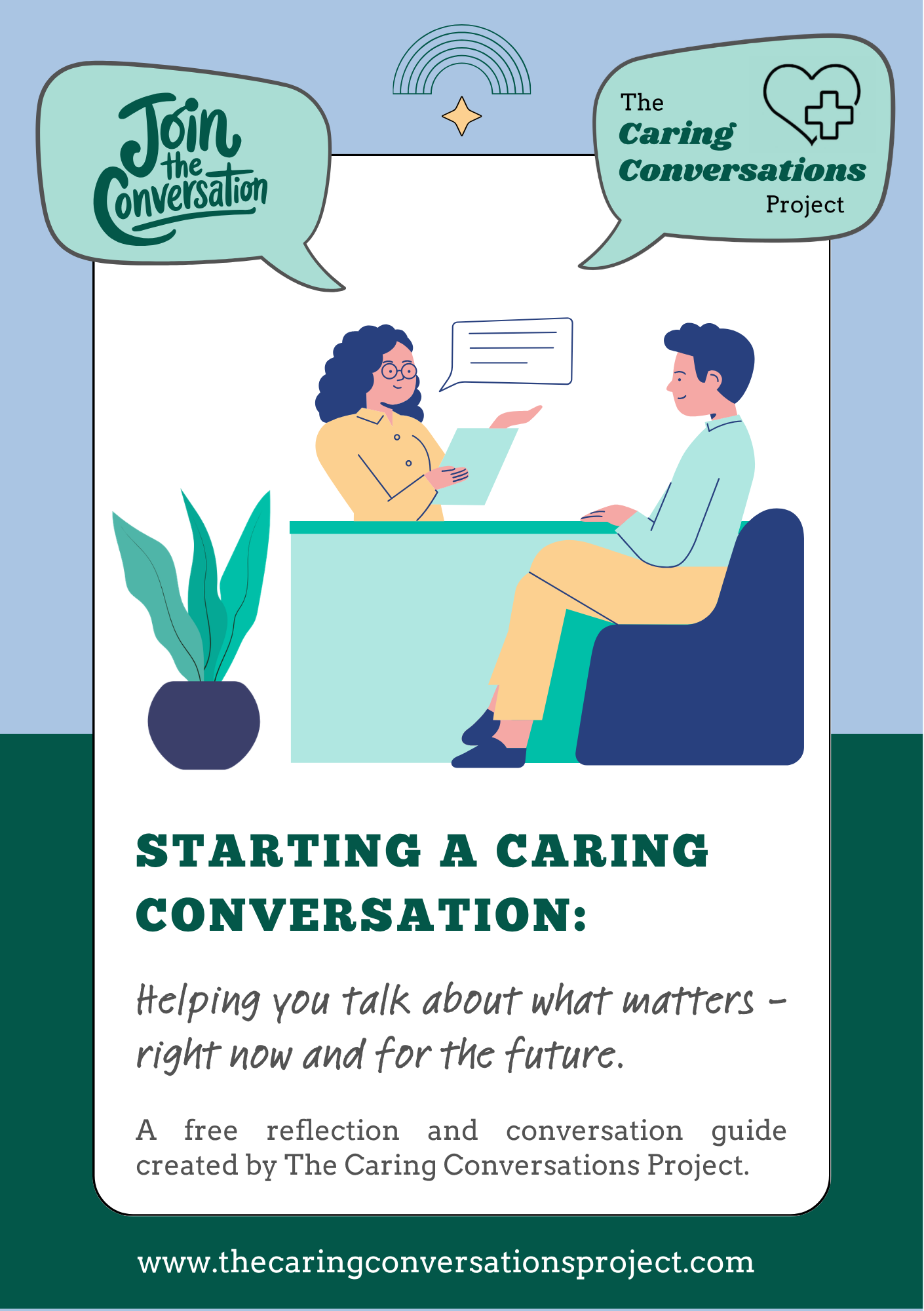
Caring Conversations Project resources:
Available now: Starting a Difficult Conversation - a free practical resource for individuals and families preparing for sensitive conversations about care, wishes and what matters most.
Coming soon: additional Caring Conversations Project resources for families supporting someone at the end of life, including a practical guide to being alongside someone who is dying, understanding what to expect, knowing what may help, asking questions, and finding support through grief and bereavement.
Join the mailing list for our quarterly newsletter or follow along on social media to hear about new resources, updates and useful information as they’re released.