

Difficult Conversations in Care:

Some conversations about health and care can feel hard to start.

Not sure how to begin?
You may need to talk about a change in health, worries about the future, treatment choices, what matters most, where care happens, or what someone would want if they became more unwell.
These conversations do not need to be perfect.
What matters is having the chance to ask questions, share concerns and make sure the people involved understand what is important to you and your family.

This section can help you:
Prepare for an important conversation
Work out what you want to ask or say
Talk about what matters most to you
Understand your options and choices
Speak up when something does not feel right
Include the people you want involved
Feel more confident when talking with healthcare professionals
Revisit conversations as things change
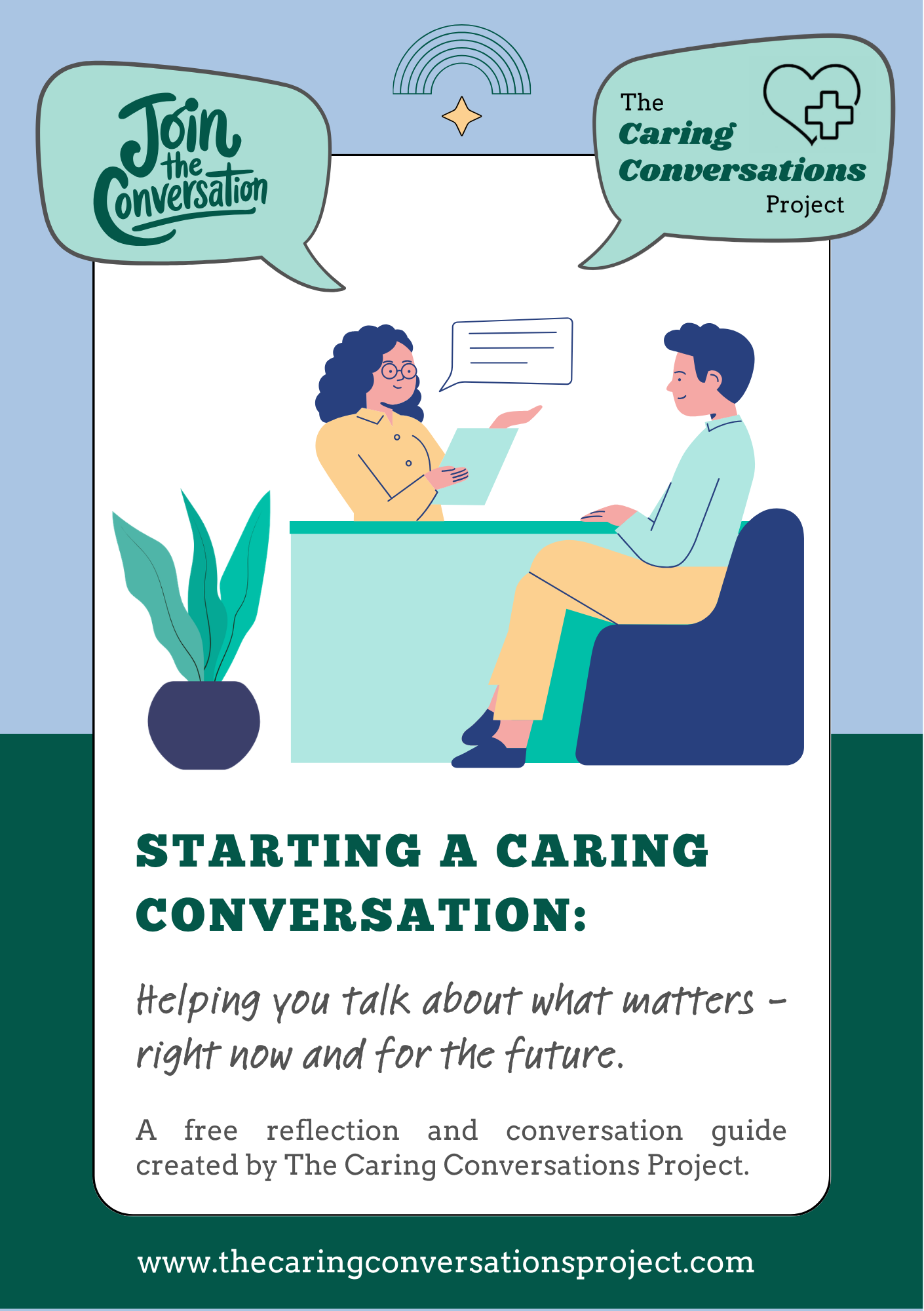
Designed to help when you know a conversation needs to happen but are not quite sure how to start.
It includes simple prompts to help you think about what you want to say, who you want to involve, what questions you might want to ask and what matters most to you. It can be used before a healthcare appointment, when talking with family, or when discussing changes in health, care or the future.
You do not need to have all the answers. Sometimes the first step is simply finding a way to begin.
Preparing for a conversation:
A little preparation can make an important conversation feel less overwhelming.
Beforehand, it can help to think about:
What is worrying me most right now?
What do I most want to understand?
What decisions need to be made?
What matters most to me or the person I am supporting?
Who would I like to be part of the conversation?
What would I like to come away knowing?

You may want to write down your questions, take notes during the conversation, or ask someone you trust to come with you.
You can also ask for more time, another appointment, written information or a follow-up conversation if you need it.
Questions you can ask:

You are allowed to ask questions, ask for things to be explained differently and take time to understand your options.
Some useful questions include:
What is happening now?
What might happen next?
What are the options?
What are the possible benefits and downsides of each option?
What happens if we choose not to do this?
Is there anything we need to decide today?
What would you recommend, and why?
How does this fit with what matters most to me?
Who can we contact if we have questions later?

If something is unclear, it is okay to say:
“Could you explain that in a different way?”
“Can you tell me what that means for everyday life?”
“I need a little more time to think about this”
If you disagree or feel unheard:
Sometimes conversations about care do not go the way you hoped.
You may feel that your concerns have not been understood, that decisions are moving too quickly, or that what matters to you or your family is being overlooked.
It can help to:
Be clear about what you are worried about
Ask how a decision has been reached
Ask what other options have been considered
Request another conversation if you need more time
Ask for another member of the healthcare team to be involved
Bring someone you trust with you
Ask about advocacy or support services if you need help speaking up

Disagreement does not have to mean conflict. Sometimes it simply means that people are looking at the situation from different perspectives and need more time, information or support to understand each other.
Know your rights:
In New Zealand, people receiving health and disability services have rights under the Code of Health and Disability Services Consumers’ Rights.
These include the right to:
Be treated with respect
Have your privacy respected
Receive information you can understand
Ask questions and receive answers
Be involved in decisions about your care
Give or refuse consent
Have a support person with you in most situations
Make a complaint if you are unhappy with the care you receive
Knowing your rights can make it easier to speak up, ask for clarification and take part in decisions about your care.
If you need extra support, you can also ask whether an advocate is available to help you understand your rights or raise concerns. The Nationwide Health and Disability Advocacy Service offers free, independent support for people in New Zealand who have questions or concerns about their health or disability care.
Talking with family:
Family conversations can be just as difficult as conversations with healthcare professionals.
People may have different hopes, fears, beliefs or ideas about what should happen next. Some may want lots of information, while others may find these conversations difficult to face.
It can help to:
Choose a time when you are not rushed
Start with what matters most rather than jumping straight into decisions
Give everyone space to speak
Be curious about different views rather than trying to convince each other
Be honest when you do not know the answer
Remember that people may need time to process what they have heard
Come back to the conversation later if needed

Sometimes a useful place to begin is:
“I know this is difficult to talk about, but I think it would help if we understood what matters most to each of us”
These conversations may happen more than once. What matters can change as health, circumstances and priorities change.
Explore related topics:

Advance Care Planning: thinking about what matters to you, your wishes and future care.
Palliative Care: understanding what it is, when it can help and what support may be available.
Carer Wellbeing: support for the emotional and practical impact of caring for someone.
Appointment Confidence: preparing for appointments, asking questions and having a stronger voice in your care.
Children & Families: support for families navigating complex or serious health needs in paediatric care.
End of life & Dying: information about changing goals of care, what to expect and supporting someone near the end of life.